Post by chichak on Apr 21, 2010 23:24:50 GMT 3
Dear forum members,
The topic was touched upon earlier in one of the threads and Hjernespiser was kind enough to ad a very relevant argument about the reconstruction of the clothing of ancient Hungarians.
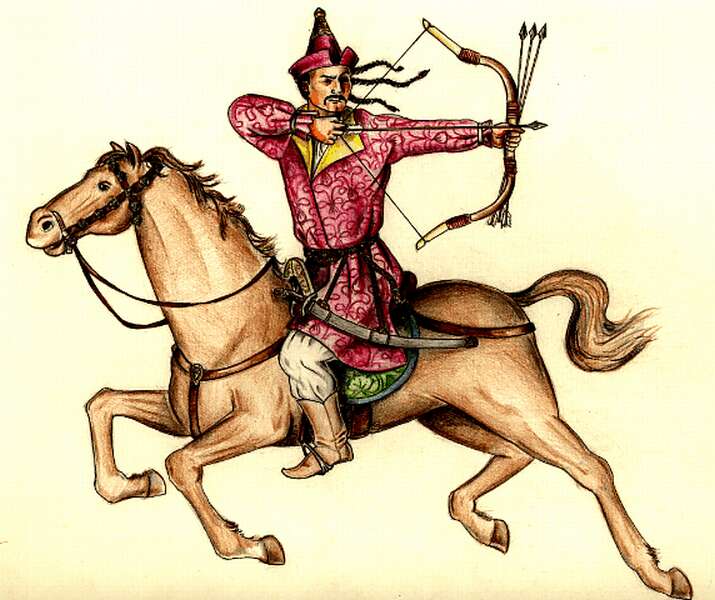
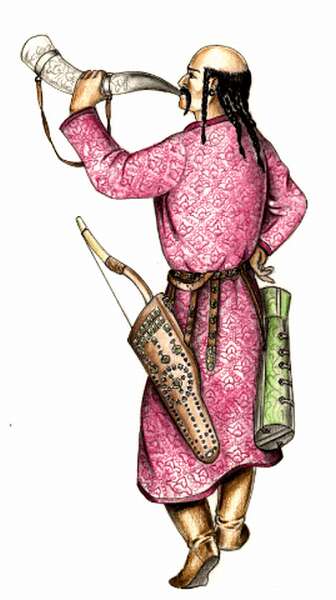
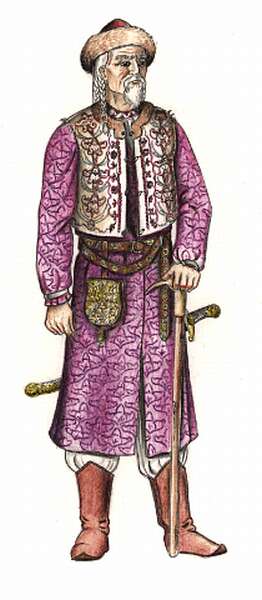
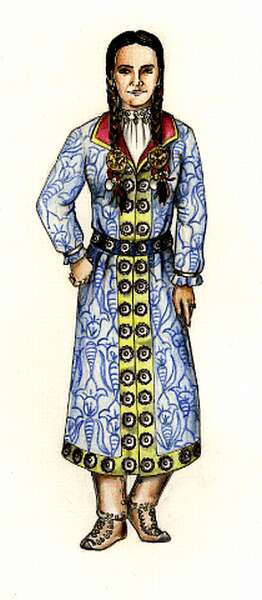
As a growing number of history enthusiasts and Hungarian citizens with patriotic feelings start wearing for certain occasions what they believe are reconstructions of ancient Hungarian clothing, one can't help but notice an increasing diversion into fantasy clothing of choice. Its of course one's choice to wear what they want to, although it concerns me to see lesser stress on authentic evidences.
I would like to have a serious discussion here about the possible styles of clothing of the ancient nomadic Hungarians based upon sources.
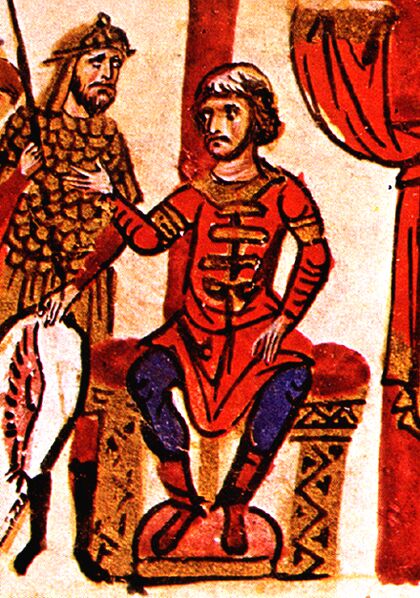
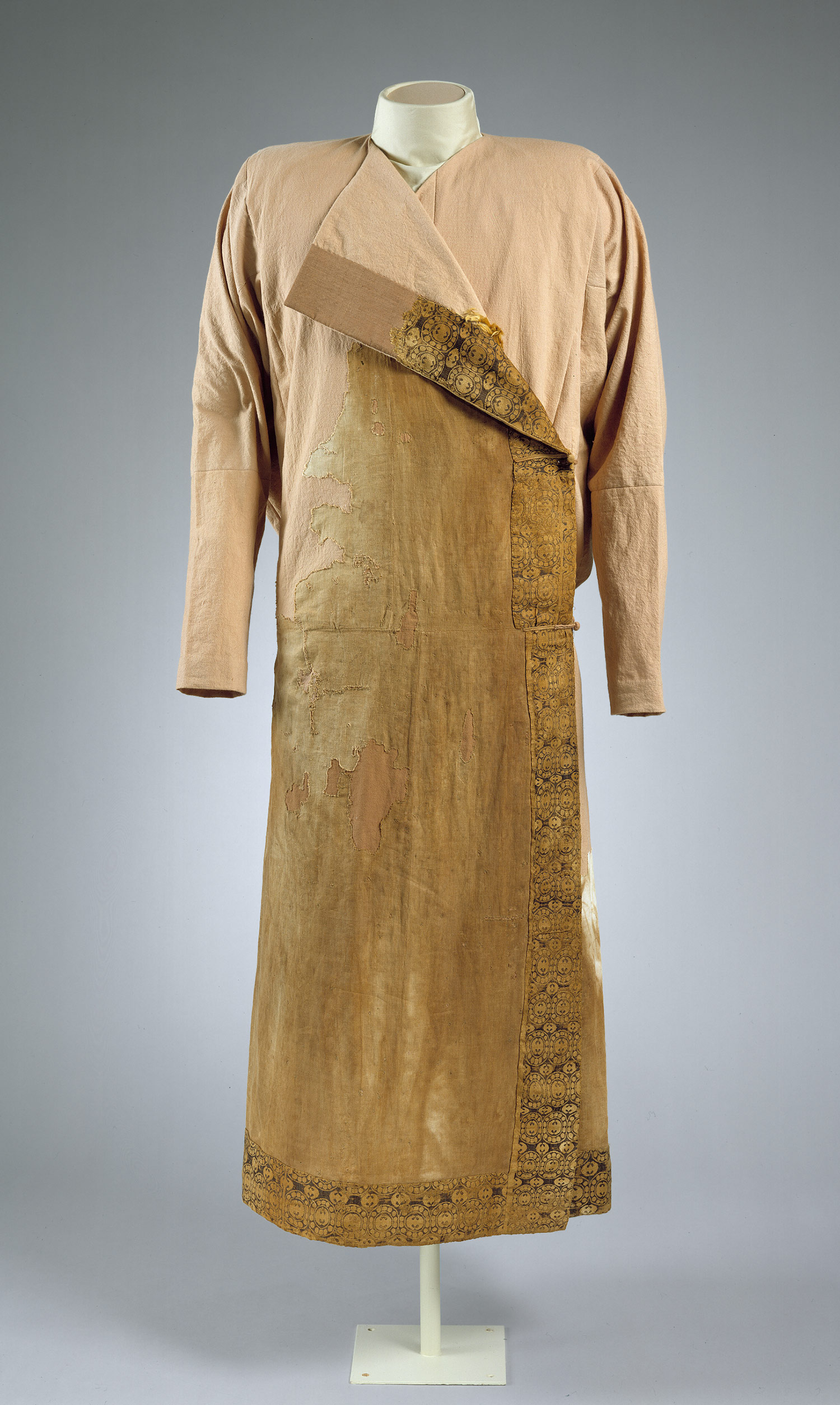
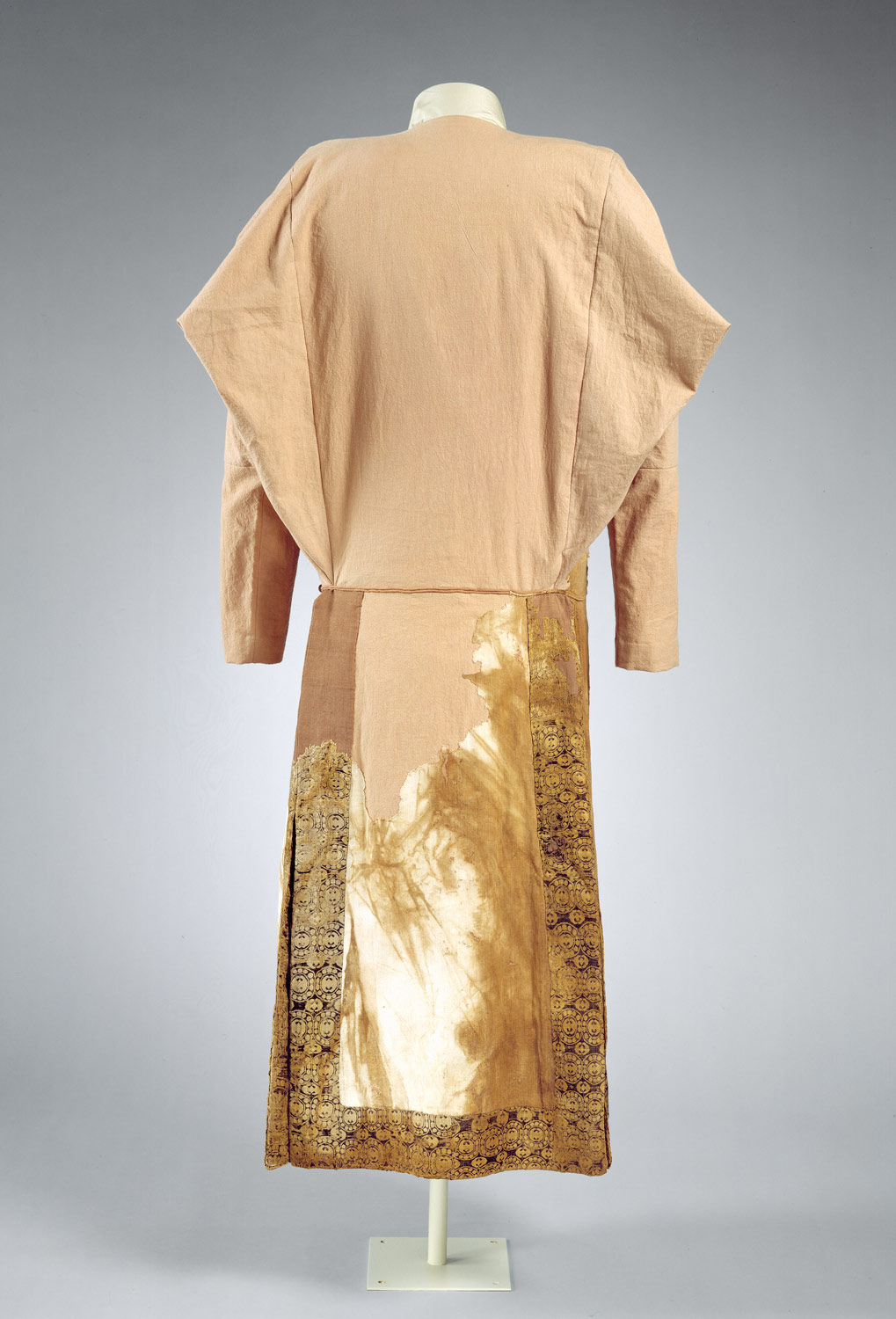
To start the discussion let us look at the contemporary (or almost contemporary) sources depicting Hungarians of the time which could give minimal clue to start with:
Contemporary depictions
Russian archaeologists have uncovered two archaeological finds that quite likely bear depictions of ancient Hungarians. Although the similar artistic style of nomadic people makes it difficult or almost impossible differentiating between ethnic groups. Despite this, minor identifying traits have been found on Hungarian goldsmith's work from a certain period onwards, but as is the case with the Nagyszentmiklós treasures the question remains open about associating certain finds with specific ethnic groups.
1. Russian archaeologists tend to associate the following depiction of a rider on a 9th century silver bowl from the Volga region with Hungarians rather than Volga-Bulgarians:
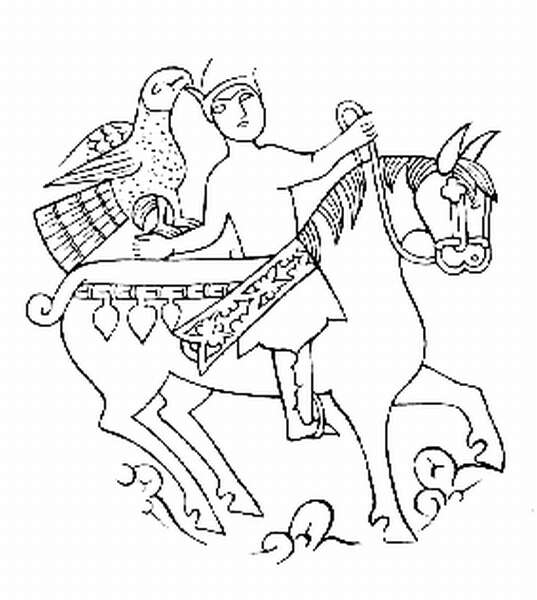
Here is another drawing of the same engraving, but with additional details, that I am not totally certain are authentic. The caption even has got the archaeological site wrong:

Source: Árpád népe (Árpád's people) by Gyula László, Helikon publications, Budapest, 1988, picture 49
2. A very recent depiction I have come upon, although I have read about the find two years ago. Found at Staraya Riazan, Russia, the article mentions that it might be a work of 9th century Hungarian goldsmiths from the Kievan Rus state area. The article also mentions a dancing girl on the same silverware although this isn't shown.

Source: magyarmuzeum.org/index.php?projectid=4&menuid=119
Because I have not seen it yet in any authenticated expert book publications I am having doubts about assigning any ethnic affiliations to it.
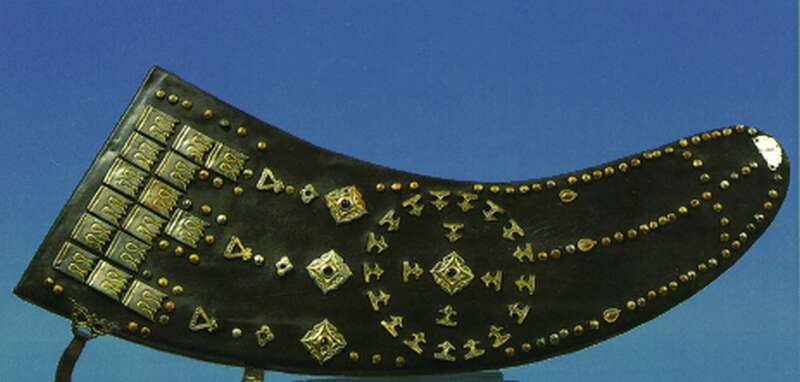
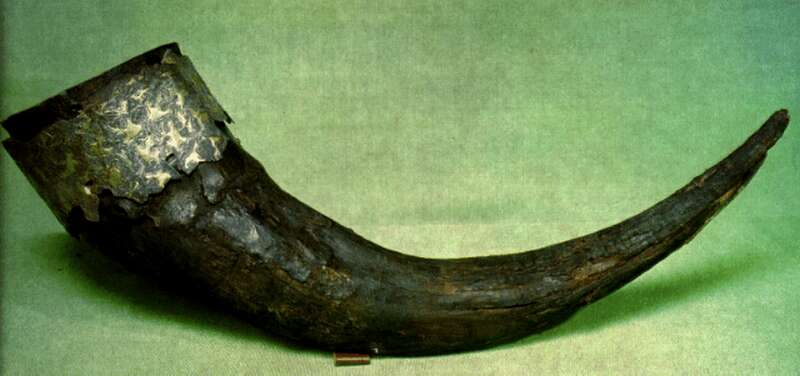
3. From the Ukraine a tenth century decorated horn from Cernigov is thought to be Hungarian because of the related finds (sabretache plate):
www.tforum.info/forum/index.php?s=dfa8db9407e216542c1bc6dcb0df1a02&act=attach&type=post&id=14338
and techniques and palmetta (floral) patterns used:
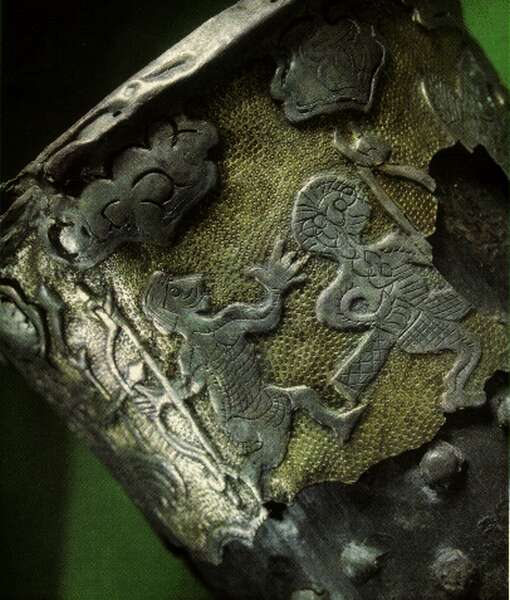
The two figures:
The horn:

The palmetta pattern of the Horn:

Compare the above pattern to the high ranking Hungarians sword kept at the Vienna treasury also known as "Attila's sword"(unauthentically).

Source: B.A. Rybakov: Russian applied Art of tenth-thirteenth centuries. Aurora, Leningrad, 1970
After this we are finished with contemporary figural depictions that could help, because Hungarian art avoided figural representation (a possible Islamic influence).
Western depictions of ancient Hungarians (almost certainly representing ancient Hungarian):
1. Decorations of capital stones from the early 12th century Regensburg, Germany:
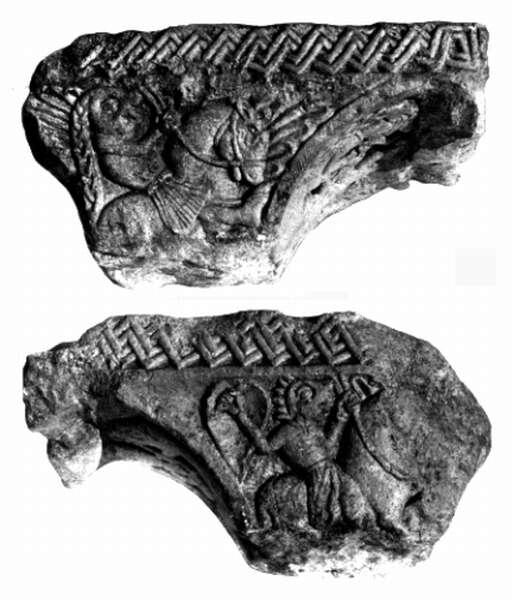
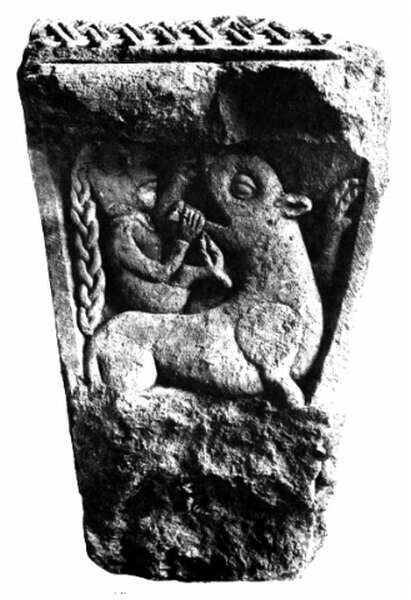
Source: Regensburg museum of archaeology.
2. Mural from the Aquileia cathedral, late 12th century, North-East Italy:
Mounted archer chased by an armored knight


From the territory of Hungary. Earliest depictions of Hungarian clothing(?):
1. Somogyvár monastery 12th century:
www.sulinet.hu/oroksegtar/data/megyek_oroksege/Csongrad_megye/pages/Kozepkori_del_alfold_es_szer/images/017_aracsi_clip_image002_0003.jpg
www.sulinet.hu/oroksegtar/data/megyek_oroksege/Csongrad_megye/pages/Kozepkori_del_alfold_es_szer/images/017_aracsi_clip_image002_0005.jpg
2. Esztergom royal chapel, 12th century:

Here's a better picture from a slide show of the chapel:
www.utazzitthon.hu/galeria-latnivalo.php?id=386&start=2
I have not mentioned yet the illustrations from the Hungarian chronicle Chronicon Pictum which might be influenced by Cumanian and Ias clothing, but I will be posting relevant examples from there also.
The topic was touched upon earlier in one of the threads and Hjernespiser was kind enough to ad a very relevant argument about the reconstruction of the clothing of ancient Hungarians.
As a growing number of history enthusiasts and Hungarian citizens with patriotic feelings start wearing for certain occasions what they believe are reconstructions of ancient Hungarian clothing, one can't help but notice an increasing diversion into fantasy clothing of choice. Its of course one's choice to wear what they want to, although it concerns me to see lesser stress on authentic evidences.
I would like to have a serious discussion here about the possible styles of clothing of the ancient nomadic Hungarians based upon sources.
To start the discussion let us look at the contemporary (or almost contemporary) sources depicting Hungarians of the time which could give minimal clue to start with:
Contemporary depictions
Russian archaeologists have uncovered two archaeological finds that quite likely bear depictions of ancient Hungarians. Although the similar artistic style of nomadic people makes it difficult or almost impossible differentiating between ethnic groups. Despite this, minor identifying traits have been found on Hungarian goldsmith's work from a certain period onwards, but as is the case with the Nagyszentmiklós treasures the question remains open about associating certain finds with specific ethnic groups.
1. Russian archaeologists tend to associate the following depiction of a rider on a 9th century silver bowl from the Volga region with Hungarians rather than Volga-Bulgarians:
Here is another drawing of the same engraving, but with additional details, that I am not totally certain are authentic. The caption even has got the archaeological site wrong:
Source: Árpád népe (Árpád's people) by Gyula László, Helikon publications, Budapest, 1988, picture 49
2. A very recent depiction I have come upon, although I have read about the find two years ago. Found at Staraya Riazan, Russia, the article mentions that it might be a work of 9th century Hungarian goldsmiths from the Kievan Rus state area. The article also mentions a dancing girl on the same silverware although this isn't shown.
Source: magyarmuzeum.org/index.php?projectid=4&menuid=119
Because I have not seen it yet in any authenticated expert book publications I am having doubts about assigning any ethnic affiliations to it.
3. From the Ukraine a tenth century decorated horn from Cernigov is thought to be Hungarian because of the related finds (sabretache plate):
www.tforum.info/forum/index.php?s=dfa8db9407e216542c1bc6dcb0df1a02&act=attach&type=post&id=14338
and techniques and palmetta (floral) patterns used:
The two figures:
The horn:
The palmetta pattern of the Horn:
Compare the above pattern to the high ranking Hungarians sword kept at the Vienna treasury also known as "Attila's sword"(unauthentically).
Source: B.A. Rybakov: Russian applied Art of tenth-thirteenth centuries. Aurora, Leningrad, 1970
After this we are finished with contemporary figural depictions that could help, because Hungarian art avoided figural representation (a possible Islamic influence).
Western depictions of ancient Hungarians (almost certainly representing ancient Hungarian):
1. Decorations of capital stones from the early 12th century Regensburg, Germany:
Source: Regensburg museum of archaeology.
2. Mural from the Aquileia cathedral, late 12th century, North-East Italy:
Mounted archer chased by an armored knight
From the territory of Hungary. Earliest depictions of Hungarian clothing(?):
1. Somogyvár monastery 12th century:
www.sulinet.hu/oroksegtar/data/megyek_oroksege/Csongrad_megye/pages/Kozepkori_del_alfold_es_szer/images/017_aracsi_clip_image002_0003.jpg
www.sulinet.hu/oroksegtar/data/megyek_oroksege/Csongrad_megye/pages/Kozepkori_del_alfold_es_szer/images/017_aracsi_clip_image002_0005.jpg
2. Esztergom royal chapel, 12th century:
Here's a better picture from a slide show of the chapel:
www.utazzitthon.hu/galeria-latnivalo.php?id=386&start=2
I have not mentioned yet the illustrations from the Hungarian chronicle Chronicon Pictum which might be influenced by Cumanian and Ias clothing, but I will be posting relevant examples from there also.
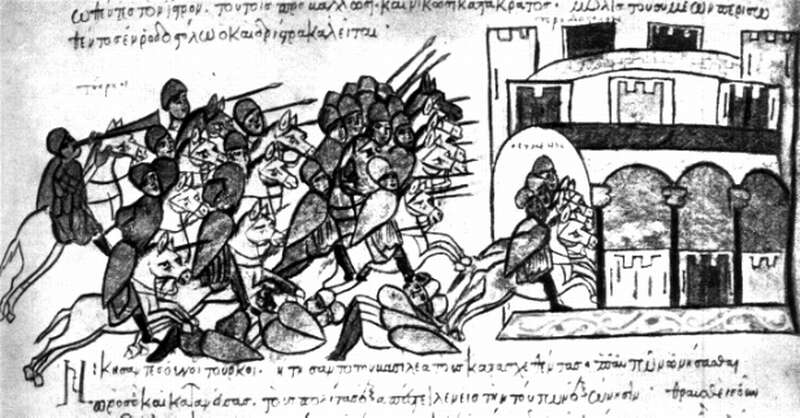


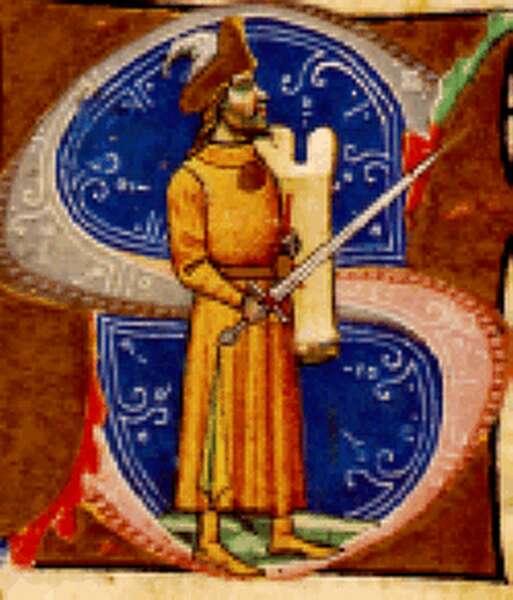
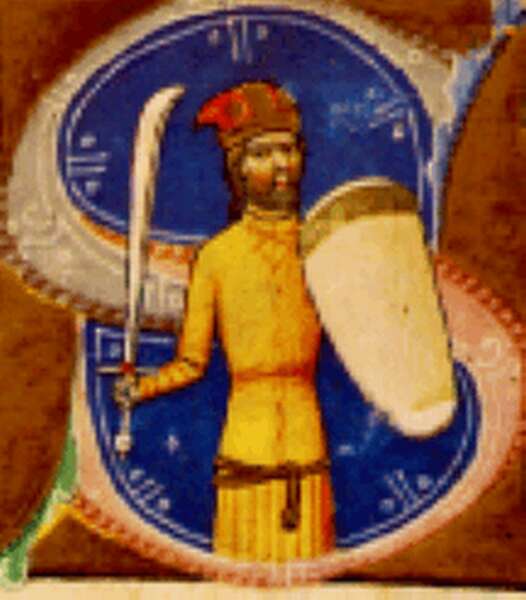





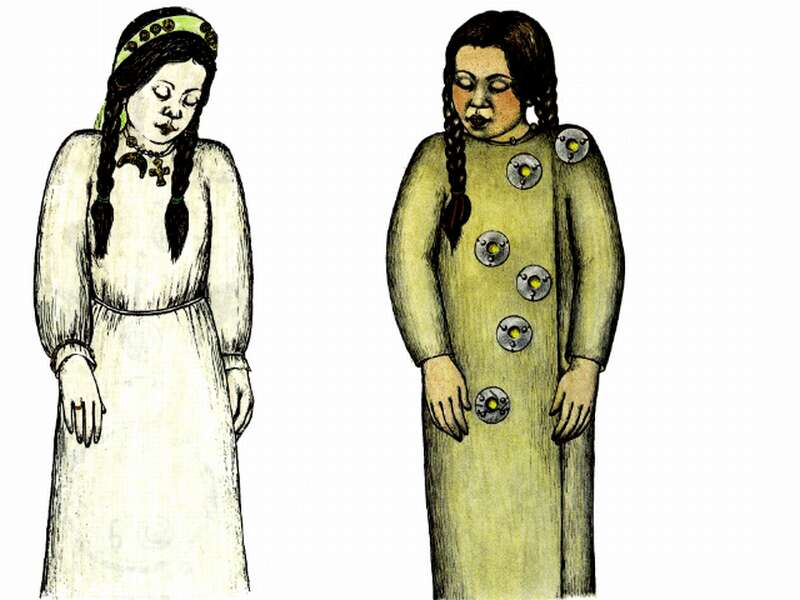
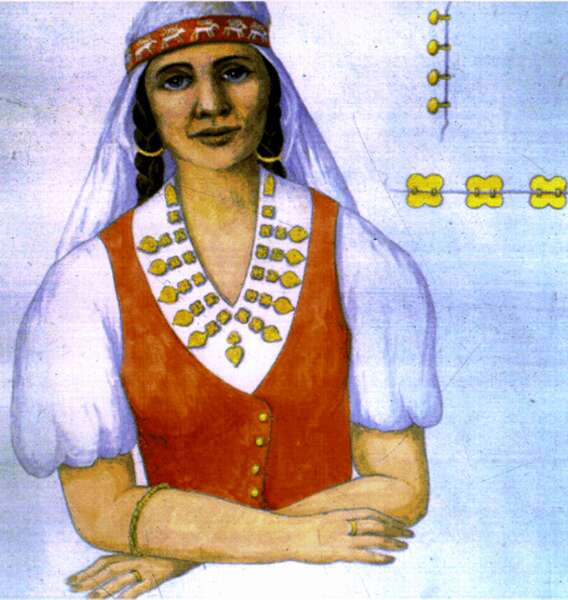
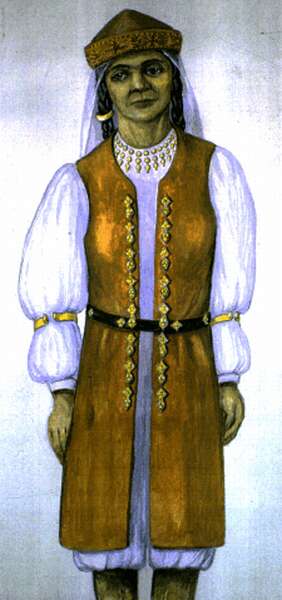
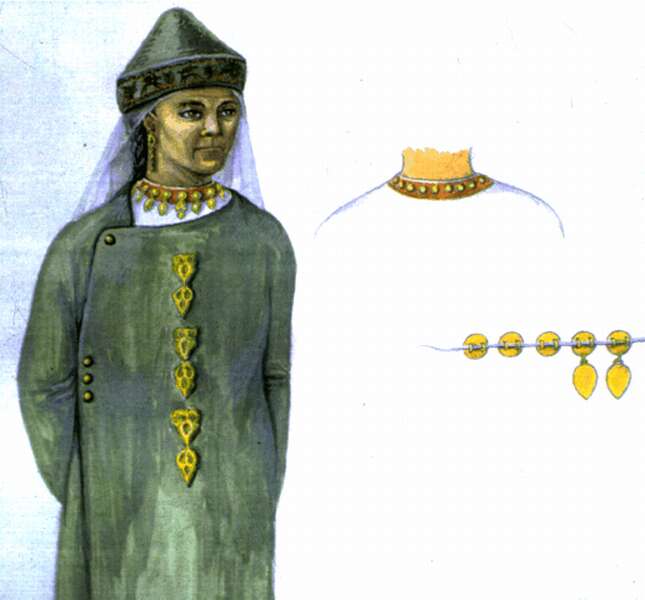


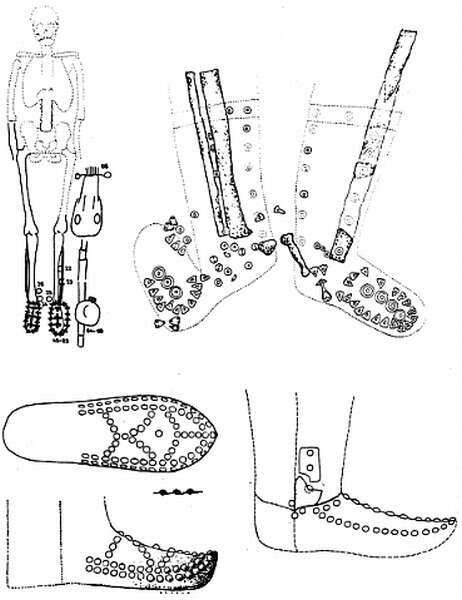


 ):
):